
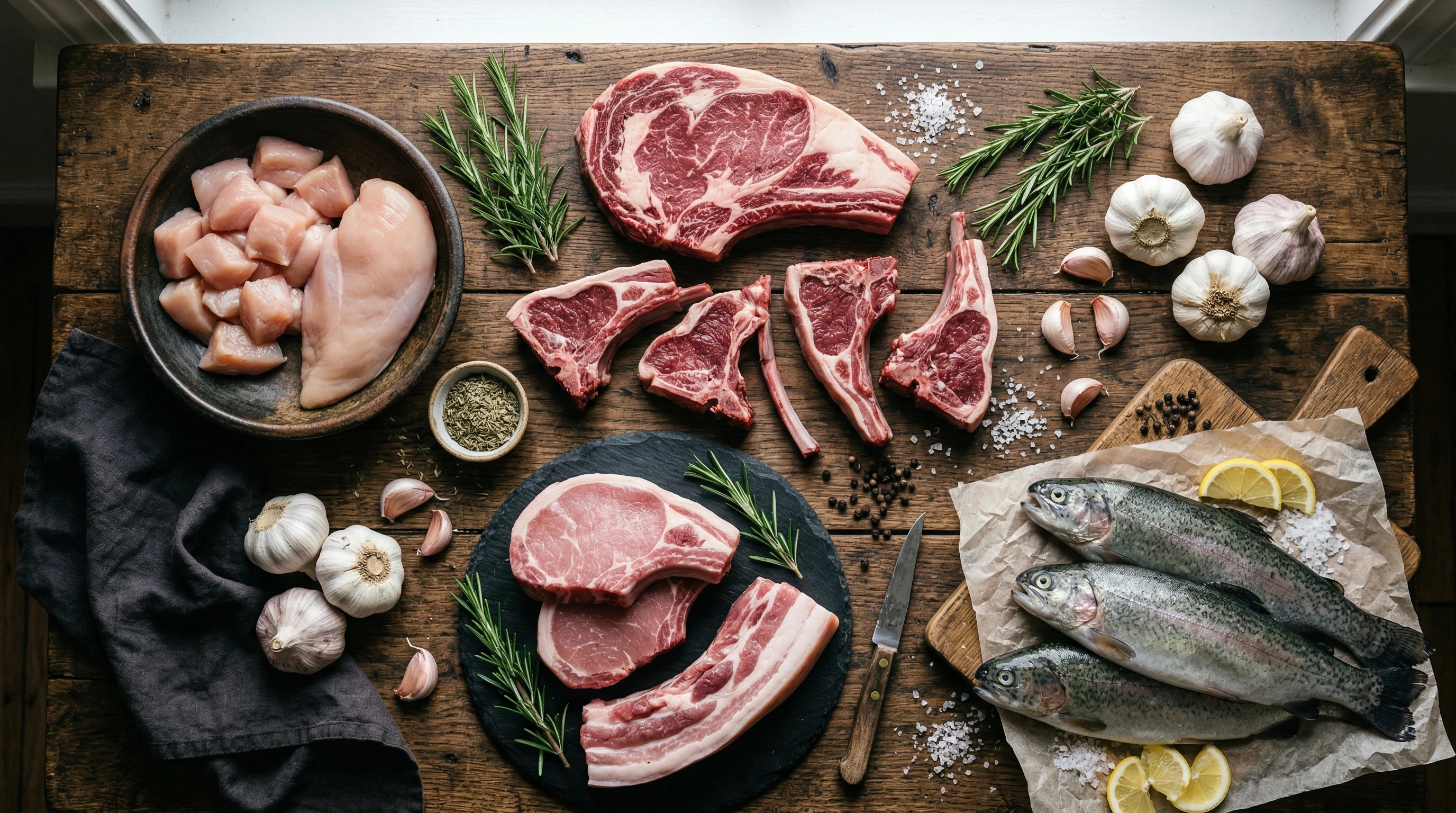
 Eating a carnivore diet means focusing almost entirely on animal foods, with meat taking centre stage at every meal! If you’re just starting out or want to mix things up, knowing which meats to try (and why they’re worth eating) can make meals way more satisfying and easier to stick with.
You may be wondering why anyone would go fully carnivore? Won’t they be missing essential nutrients? There can be various reasons for adopting the carnivore lifestyle. Some may want to go back to our ancestors way of eating, get back to nature, and others want to cut out all the possible foods that are causing them issues such as auto-immune problems, psoriasis, eczema, arthritis, diabetes etc etc. Cutting out carbs, sugars, ultra processed foods, and even for some people the anti-nutrients that some plants have, can have really beneficial effects for some, whether it’s a short term or long term solution.
Whether you’re curious about which meats offer the most nutrition, or looking for some new ideas on how to cook beef, pork, poultry, and more, this guide has practical info and tips from my own experience. There’s a lot more to the carnivore diet than just steaks, so having a list of tasty, nutrient rich options makes it so much easier to put together meals you’ll actually enjoy.
Below, I’ll go over the types of meat that fit perfectly into a carnivore lifestyle, the benefits of each, and some easy cooking methods to bring out the best flavour and nutrition. This all in one guide can help you feel confident at the butchers counter and keep your meals exciting day after day.
1. Beef: The Carnivore Staple
Beef is usually the main event on a carnivore diet. It’s packed with protein, iron, B vitamins, and healthy fats, all things your body craves when you cut out plants and carbs. Fatty cuts also keep you fuller for longer; this comes in handy if you’re eating fewer meals or practising intermittent fasting.
Top Choices:
- Ribeye – Super tender, high in fat, and loaded with flavour. Makes a filling meal on its own.
- Chuck Roast – Affordable and great for slow cooking, which means lots of leftovers for busy days.
- Minced Beef – Budget-friendly and incredibly versatile. Go for 80/20 for great taste and balanced fat.
- Short Ribs – Slightly more indulgent, slow cooked short ribs turn out juicy and packed with rich, beefy flavour.
How I Cook It: Grilling or pan-searing steaks (like ribeye) until medium rare brings out their best texture. For roasts or tougher cuts, slow cooking or braising is my favourite; it turns them ultra tender and hard to mess up. For ground beef, simple skillet cooking with a pinch of salt makes it easy to portion for meals or snacks.
2. Pork: Delicious Variety and Flavour
Pork often gets overlooked, but it’s pretty handy on a carnivore diet. It adds a different flavour and texture to your meals, breaks up beef fatigue, and helps round out your nutrient intake. Pork is high in thiamin, zinc, and selenium. It’s also budget friendly and widely available.
Top Choices:
- Pork Belly – Super rich, fatty, and crisp when roasted or seared. Think bacon but more filling.
- Pork Shoulder – Awesome for slow cooking or pressure cooking. Shreds easily for pulled pork.
- Pork Chops – A leaner cut, but still juicy, especially if you brine or pan sear them.
- Spare Ribs – Perfect for smoking or baking, ribs are fun for a weekend meal.
How I Cook It: Roasting pork belly with just salt brings out crisp skin and tender meat underneath. For pork shoulder, I go for several hours in a slow cooker with just salt, sometimes a touch of pork fat, and it falls apart perfectly. For chops, a simple sear on a cast iron skillet keeps them juicy, especially if you let them rest before slicing. Mixing pork with other meats can give added variety to your meals.
3. Poultry: Light and Versatile Protein
Chicken, turkey, and duck offer a lighter change from red meats and work well for anyone wanting to mix up their protein sources. While poultry isn’t always as nutrient dense as red meat, it’s still a solid choice with great B vitamins and lean protein.
Top Choices:
- Chicken Thighs – More flavourful (and fattier) than breasts, thighs are easy to cook and rarely dry out.
- Whole Chicken – Roasting a whole bird gives crispy skin, juicy meat, and plenty of leftovers.
- Duck – Rich, fatty, and a total treat if you roast or pan sear it right.
- Turkey Legs – Juicier and more flavourful than chicken, especially when slow cooked or smoked.
How I Cook It: Oven roasting chicken thighs with the skin on gets them crisp outside and tender inside. For whole birds, I rub with salt and roast at high heat for a golden finish. Duck breast pan seared skin side down is delicious, just keep the heat moderate so the fat renders slowly. Turkey legs get the best flavour from slow roasting or smoking. Including poultry a few times a week helps keep your carnivore adventure interesting.
4. Lamb: Nutrient Rich and Delicious
Lamb is a favourite when you want something rich and a little different. It’s high in healthy fats, B12, zinc, and iron. Grass fed lamb also brings extra omega-3’s, which is pretty unique for a red meat. The taste is deeper and a bit earthier than beef, so it’s great to mix in from time to time.
Top Choices:
- Lamb Shoulder – Superb for slow roasting or braising, and shreds beautifully.
- Lamb Chops – Quick to cook, tender, and almost buttery in texture.
- Leg of Lamb – A great choice for grilling, roasting, or slicing thin for sandwiches or wraps.
How I Cook It: I like rubbing lamb with sea salt and roasting until medium rare, especially for chops or leg cuts. For shoulder, low and slow cooking is key. Cover it and bake gently for a few hours to keep it moist and break down the tougher fibres. Trying lamb can add some eye catching meals to your week and boost your nutrient intake.
5. Organ Meats: Super Nutritious Options
While steaks and roasts get all the attention, organ meats are like nutritional powerhouses. They provide vitamins and minerals (like vitamin A, copper, and choline) in high amounts you just won’t get from muscle meats alone. Many traditional diets around the world have valued organ meats for centuries.
Top Choices:
- Liver – Extremely high in vitamin A, B12, and iron. A little goes a long way.
- Heart – Rich in CoQ10, iron, and B vitamins. Texture is similar to steak.
- Kidney – Full of selenium and B12, with a unique taste.
How I Cook It: Sautéing thin sliced liver quickly with a bit of beef fat and sea salt is the easiest way I’ve found to keep it tender. I usually rinse kidneys well and pan fry with a sprinkle of salt. For heart, I slice it and grill or pan sear; it tastes like a dense steak and works great in stir fries or skewers. Give organ meats a try, even just once a week, to step up your nutrition game.
6. Seafood: Omega-3 Rich Choices
Fish and shellfish are welcome on a carnivore diet, especially if you want a dose of healthy omega-3 fats and a little more variety. Wild caught options usually have higher levels of beneficial fats, but all seafood brings something nutritious to the table, from protein to trace minerals. Seafood is a good pick for days when you want something lighter and quicker to prepare.
Top Choices:
- Salmon – Loaded with omega-3’s, vitamin D, and protein. Rich, soft texture.
- Sardines – Canned sardines (with bones) are convenient, calcium rich, and affordable.
- Shrimp – Lean, high in protein, and super quick to cook.
- Oysters – Full of zinc, copper, and other key minerals, plus they’re easy to eat raw or cooked.
How I Cook It: I bake salmon fillets at 350°F for about 12 minutes for a tender, flaky result. Sardines are ready to eat straight from the can; I like them with a sprinkle of salt. For shrimp, a quick sauté in grass fed butter works well. Oysters can be eaten raw or roasted quickly in a hot oven. Switching in seafood keeps the carnivore diet well rounded and gives a boost to your omega-3 intake.
7. Game Meats: Wild Flavour and Lean Protein
Game meats offer tons of variety and are usually leaner and richer in certain nutrients than regular store beef or pork. Consider these if you can get them locally or from a reliable butcher. If you hunt or know someone who does, you can get some special cuts that most people never try.
Top Choices:
- Venison (deer) – High protein, lean, and earthy in flavour. Great in stews or pan seared as steaks.
- Elk – Similar to venison but a bit milder and more tender.
- Bison – Leaner than beef but still flavourful and easy to grill or pan sear.
How I Cook It: Since most game meats are very lean, I like adding some beef tallow or bacon fat when cooking, especially for ground meat or tenderloin steaks. Slow cooking game roasts helps avoid dryness and keeps the flavour rich. Give game meats a go when you want to mix in some variety and get more adventurous with your meals.
How to Choose the Best Meat for a Carnivore Diet
Pick the cuts you actually enjoy eating and that fit your nutritional needs. Mixing fattier and leaner cuts works best for keeping meals both tasty and satisfying. Don’t be afraid to try something new every week; expanding your protein options can help avoid food boredom and keep you motivated, especially long term.
If you’re looking for higher quality, grass fed or pasteurised meats tend to have better nutrient profiles, but don’t stress if your budget only allows for grain fed. Proper cooking and seasoning, mainly with salt, make almost any cut delicious. Rotating your meats each week helps you optimise nutrient intake and discover which cuts best suit your taste and needs.
Practical Tips for Cooking Carnivore Meats
- Use salt: Salt steps up flavour and helps replace electrolytes you might lose on a zero carb diet.
- Don’t overcook: Keep most steaks and chops at medium rare to medium; overcooking can dry out the best cuts.
- Collect drippings: Fat drippings from roasts or slow cooked meats can be saved to top other dishes or even used to cook eggs for a richer taste (if you eat them).
- Batch cooking: Roasting several pounds of meat at once saves time and makes meal prep easier.
Having a variety of meats to choose from keeps the carnivore diet interesting and helps you hit your nutrition goals every day. Trying new cuts, exploring different cooking methods, and focusing on fattier, nutrient rich meats are some of the best ways to keep things both simple and delicious. Enjoy experimenting with the endless ways to prepare your favourites and stumble upon new meals during your carnivore adventure. Wrapping up, remember that eating meat can be simple, satisfying, and filled with great flavours when you keep an open mind and a hungry appetite.