Ultra-processed foods pop up everywhere. Grabbing a quick snack or a pre-made meal makes life pretty convenient, but behind all that convenience is a long list of hard-to-pronounce additives. These ultra-processed picks are linked with a higher risk of weight gain, blood sugar spikes, and not feeling your best overall. If you want to sidestep some of these health pitfalls, figuring out which ultra-processed foods to cut back on is a good place to start.
This guide breaks down what makes a food ultra-processed, the ingredients you’ll find in them, and the common grocery store items worth skipping if you want to eat less junk. If you’re new to reading nutrition labels, this will walk you through the usual suspects so it’s easy to spot them next time you shop. We’ll also offer practical tips for smarter choices so you can set up healthier, more satisfying eating habits.
What Are Ultra-Processed Foods?
When people talk about “processed foods,” not every food that’s been changed from its natural state falls into the ultra-processed club. Pickling, canning, or freezing fruits and veggies is pretty minor compared to the lab-made chemical changes you get with ultra-processed foods. These are the foods that contain lots of additives, little to no whole foods, and ingredients more at home in a science lab than a regular kitchen. Ultra-processed foods also often go through multiple industrial steps, stripping away nutrients and fibre while adding cheap sugars, fats, and artificial flavours.
Some signs you’re dealing with an ultra-processed food:
- Contains artificial flavours, colours, or preservatives
- Includes emulsifiers, stabilisers, or thickening agents
- High in sugars, fats, and sodium with minimal protein or fibre
- The ingredient list reads like a science experiment
Even though some processing is necessary for food safety and storage, ultra-processed options cross the line with heavy modifications and the addition of non-traditional food components that can be tough on your health over time.
Common Ultra-Processed Ingredients to Watch For
Not sure what’s hiding in that bright package? These ingredients show up a lot in ultra-processed foods, and spotting them helps you make a quick call about whether a snack or meal is worth buying. Here are some super common ones:
- High fructose corn syrup: A cheap sweetener you’ll find in sodas, cereals, and candy bars.
- Hydrogenated oils: Often labelled as “partially hydrogenated,” these fats keep food shelf-stable, but are linked with heart disease.
- Monosodium glutamate (MSG): Used for flavour in crisps, instant noodles and takeout sauces.
- Sodium nitrite and nitrate: Preservatives found mostly in cured meats and deli slices.
- Artificial flavours and colours: Look for names like “Red 40” or “Yellow 5” and “natural flavours” that often aren’t really natural.
- Emulsifiers like polysorbate 80 or lecithin: Keep sauces and dressings creamy instead of separating.
- Guar gum, xanthan gum, carrageenan: Thicken and stabilise processed dairy or non-dairy products.
Some ultra-processed foods feature ingredient lists that extend for lines and lines, making it difficult to know what you’re truly eating. Becoming familiar with these tricky names can go a long way in helping you shop smarter and eat cleaner. Even products marketed as “all natural” or “organic” can sometimes sneak in these additives, so staying sharp with food labels pays off.
Ultra-Processed Foods You’ll Want to Avoid
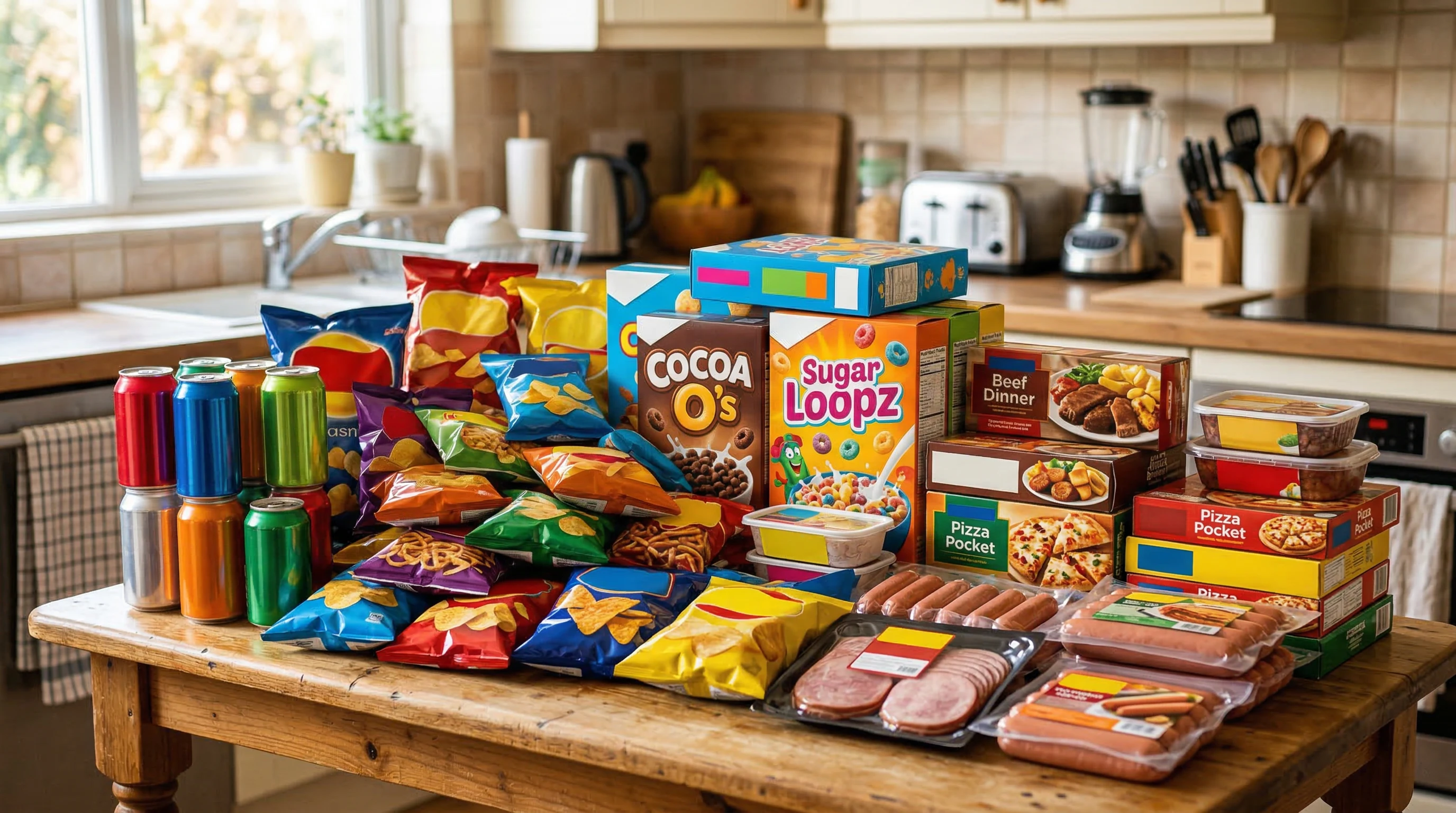
It might feel impossible to skip every ultra-processed item, so focusing on the big offenders makes things much more doable. Here’s a rundown of the types of foods that land at the top of the “ditch or limit” list:
Sugary Beverages and Soft Drinks
Sodas, sweetened iced teas, sports drinks, and fruity punches pack in added sugars and colourings with virtually no nutritional value. Diet sodas swap sugar for artificial sweeteners like aspartame or sucralose, and these aren’t much healthier, if at all. These drinks are some of the easiest to leave behind in favour of water, sparkling water, or chilled tea with citrus.
Packaged Snacks & Crisps
Crisps, cheese puffs, flavoured crackers, and salty snack mixes almost always feature a cocktail of artificial flavours, MSG, and extra sodium. Ingredients like maltodextrin and flavour enhancers keep you reaching for more. Instead, plain popcorn or roasted nuts make a tasty and satisfying switch for crunch cravings.
Sugary Breakfast Cereals and Granola Bars
Colourful cereals get their look from dyes and their taste from sugar or corn syrup. Chewy snack bars, even those advertised as “healthy,” often contain high fructose corn syrup, soy protein isolate, and palm oil. Rolling your own oatmeal at home with fruit and a drizzle of honey is a far healthier and a more filling pick for breakfast.
Instant Noodles and Packaged Pasta Meals
Instant noodles are known for ingredient lists packed with MSG, preservatives, and palm oil. Boxed macaroni and cheese or ready rice bowls are also full of stabilisers and less-than-whole grains. If you’re short on time but craving something similar, preparing whole grain pasta with a homemade tomato sauce or olive oil is easy and satisfying, although be careful on pasta portions as too many carbs will spike your blood sugar.
Processed Meats
Hot-dogs, deli meats, bacon, chicken nuggets, and sausage links are often loaded with sodium, sodium nitrite, and fillers like cornstarch or soy protein. These are best swapped out for grilled chicken, beans, lentils, or eggs when you want a protein boost without all the extras.
Frozen Dinners and Ready Meals
TV dinners, frozen pizzas, and microwavable pasta meals are stuffed with stabilisers, hydrogenated fats, flavourings, and a boatload of salt. Home-cooked batch meals let you decide what goes in, and often taste far better too. With just a little planning, keeping simple staples on hand makes healthy eating less stressful.
Packaged Baked Goods
It’s easy to forget, but boxed muffins, cake mixes, donuts, and store-bought pastries usually contain refined white flour, added sugars, and emulsifiers that keep baked treats shelf-stable, but strip them of nutrients. Bakery-fresh bread with just a handful of ingredients or homemade muffins can make a noticeable difference in both taste and nutrition.
Why Choosing Less Ultra-Processed Foods Matters
Additives and artificial ingredients aren’t only about flavour or longer shelf life; they can actually influence your physical health. Diets high in ultra-processed foods have been linked with more frequent cravings, less steady energy, unpredictable blood sugar, and greater risk for issues like heart disease, certain cancers, and type 2 diabetes, according to research from groups such as the National Institutes of Health. The evidence keeps building that it’s worth making the effort to cut back.
Whole and minimally processed foods offer more nutrients, fibre, and healthy fats. Plus, they’re often a lot more filling, so you wind up eating less and feeling better. Getting comfortable choosing foods with short, familiar ingredient lists is key for anyone who wants to steer clear of unnecessary junk long-term.
Making these changes also sets a good example for those around you, whether it’s family, kids, or friends. Even small shifts can spark conversations about why simple eating is better than going for packaged, ultra-processed convenience almost all the time.
Tips for Spotting & Skipping Ultra-Processed Foods
- Check the ingredient list: If it’s super long or loaded with hard-to-pronounce words, that’s a red flag.
- Go for foods as close to their natural state as possible—think plain yogurt, real cheese, simple bread, or nuts without added flavour.
- Choose fresh or frozen produce instead of cans filled with additives or heavy syrups.
- Be wary of flashy or brightly coloured packaging promising “fun flavours” or “more crunch”; these are almost always ultra-processed.
- Plan ahead: Prepping simple snacks and meals at home, like cut veggies, fruit, or overnight oats, can keep you from reaching for quick ultra-processed options.
Switching how you shop and snack can seem tough at first, but even minor swaps—such as choosing water over soda or oatmeal over sugary cereal—can really add up to big changes in how you feel, both in the short and long term. Start slow, swap one item at a time, and notice the difference.
Also, remember: Perfection isn’t the goal. It’s about making more nourishing choices most of the time, rather than all the time. Giving yourself some grace as you figure out what works for you will make the process a lot less stressful and way more sustainable.
Final Thoughts
Cutting down on ultra-processed foods doesn’t mean you have to cook everything from scratch or become obsessed with checking every label. Sometimes it’s just learning which ingredients to avoid and which types of foods are most likely to be loaded up with additives. Making small changes, swapping out your usual favourites for better options, and finding new things you enjoy can keep things fresh and exciting. You’ll likely notice a difference in your energy, mood, and health, and that’s really what it’s all about.